
Just this morning, I came across a listicle on a social media platform titled ‘50 Women Who Called Out Sexist Things That Are Still Blatantly Accepted’. I took the bait and thought to myself – how bad could it be? The Internet does have its way of laying it on too thick from time to time.
I couldn’t be more wrong.
In a tweet listed in that story, comedienne Eileen Mary O’Connell wrote, “Thinking about the time that I said I was distantly related to Marie Curie and a guy explained, ‘It’s pronounced Mariah Carey’.” This instant of mansplaining – of course, mistaken – and indeed, that whole list just demonstrated how little we have advanced as a society, as men, and most importantly, as women.
With International Women’s Day on March 8 approaching fast, there will be an annual swell in the tokenism that surrounds the entire feminist movement. The day aims to bring attention to gender parity and accelerate it.
‘Equality of rights under the law shall not be denied or abridged by the United States or by any state on account of sex. The Congress shall have the power to enforce, by appropriate legislation, the provisions of this article’, says the version approved by Congress in 1972. Even in 2021, the Equal Rights Amendment or the ERA, still remains unpassed in the US legislature.
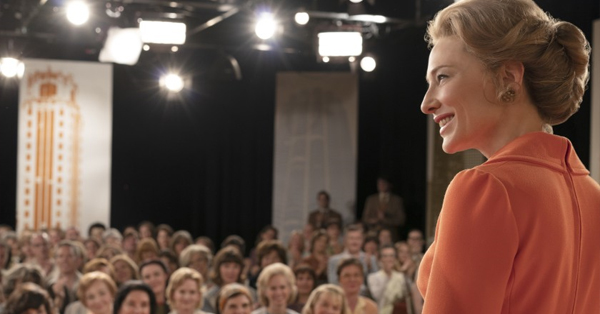
Mrs America is the story of the movement to ratify the Equal Rights Amendment and the unanticipated resistance it faced in the United States in the 1970s. The noteworthy part of this story is that much of resistance that the Amendment faced was from women. Dahvi Waller of Mad Men fame, the chief writer of this mini-series, follows an outstanding ensemble as she creates a distinctive nine-part drama on the clash between second-wave feminist heroes like Gloria Steinem, Betty Friedan and Bella Abzug on one end and the S.T.O.P ERA group led by Phyllis Schlafly on the other.
The mini-series throws brilliant light on the dichotomy in Phyllis Schlafly’s character. Betty Friedan, the author of the 1963 book The Feminine Mystique, who is often credited with sparking the second wave of American feminism, asks casually, “Who the hell is Phyllis Schlafly?” Jill Ruckelshaus and Bella Abzug also brush her off as someone “on the fringe”.
However, Schlafly is anything but fringe. On one hand, Schlafly is the perfect housewife – devoted wife and ideal mother of six children. On the other, she has political ambitions and educated opinions on national security issues. When these aren’t given equal standing, Schlafly realises that her only way in, her only way to maintain her losing influence is if she picks an issue closer home – the issue of gender. She thus focuses all her attention on opposing the ratification of the ERA.
When we first meet Schlafly in the series, she isn’t that perturbed by the ERA. In fact, at that point in 1971, the ERA had the support of politicians from both parties – the Republicans and the Democrats. Schlafly felt there were more pressing matters that begged for her attention. It was her call to the housewives via her newsletter for what she called the “rights of the wife” against the Equal Rights Amendment that halted the ERA’s progress.
Two-time Oscar winner Cate Blanchett plays Schlafly with a steely resolve – making sure to not turn the character into a women-hating caricature. She is brilliant as she plays the anti-hero and tries to portray the hypocrisy of Schlafly – when faced with losing influence in her party, she resorts to an ‘issue’ – the ERA – more in line with her sex to maintain and even advance her political standing.
Schlafly’s chief opponent is Gloria Steinem (played brilliantly by Rose Byrne), who is seen gaining fame and importance as a major stakeholder in the feminist movement but is always wary of getting into the politics of it all. The mini-series captures the friction between Steinem, Friedan and Abzug very well. The nuances in their personal interactions are a treat to watch. As in all historical fiction, these behind-the-door conversations might be more fiction than fact.
Tracey Ullman as Betty Friedan and Uzo Aduba as Shirley Chisholm also deliver standout performances.
The struggles of the women’s movement in 1970s USA resonates so strongly with our current contemporary world that it can be overwhelming. The series also does well to make us realise that just as ‘libbers’ (women’s lib activists), despite their differences, disagreements and conflicts kept fighting the good fight, egos and agendas must be kept aside for the greater good. Bella Abzug’s call to Shirley Chisholm, “Hold the door for the next bunch,” is what needs to be remembered.
One only has to read a newspaper in present-day India to realise how difficult women have it here. Still. Crimes against women, rapes, death threats, domestic violence, abuse and harassment are all too rampant. Perhaps this International Women’s Day would be a good day to binge watch the mini-series if you haven’t already and celebrate the brilliance of strong, powerful women.
Read in Bengali